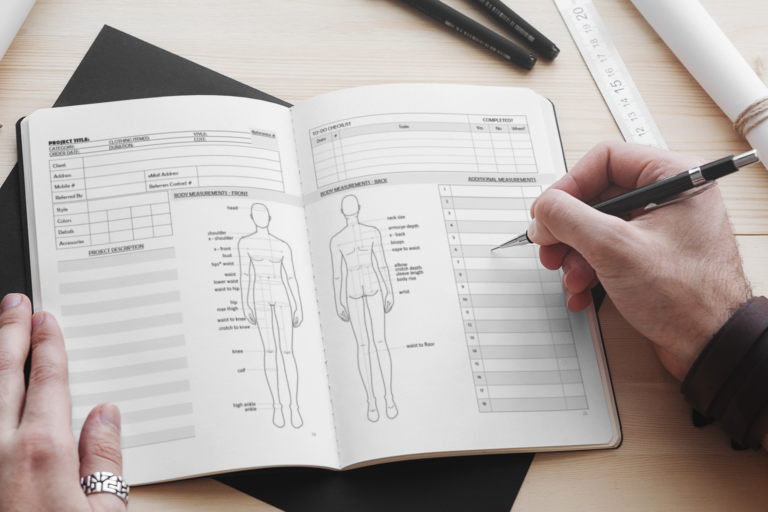
Running a sewing business means keeping track of more than just measurements. You also need to remember fabric choices, design ideas, appointments, and project details for every client. A sewing business logbook brings all of this together in one tidy place.
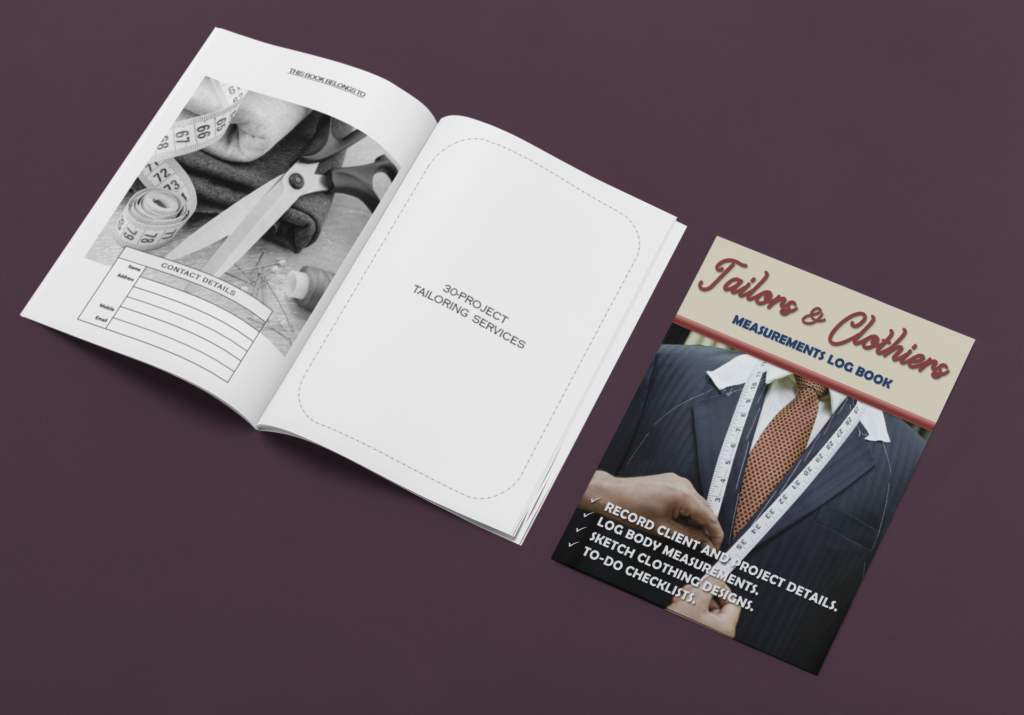
More Than Just Numbers
Most sewing logbooks focus only on writing down measurements. That is useful, but it is not the whole picture. When you are working on a tailoring project, you also need to remember which fabric the client chose, what the design should look like, and any small details they mentioned during a fitting.
A logbook built for this keeps fabric swatches, sketches, and customer data together with the measurements. Instead of flipping between a swatch card, a sketchbook, and a generic run-of-the-mill notebook, everything lives on each project’s methodically laid-out sections.
What a Good Logbook Must Include
Look for a logbook with clear sections for each part of a project. There should be space for customer data, such as name and contact details, alongside body measurements like bust, waist, and hips. There must also be sections to attach and describe fabric swatches, so you remember exactly what material you agreed on. Some books include blank space for sketches, where you can quickly draw the design idea discussed with the client. This matters more than it sounds. Memory fades fast, especially when you are juggling several projects at once.
Why Keeping Fabric Records Matters
If you have a very busy business concern, with many clients/customer jobs to implement, fabric choices can be tricky to remember weeks later. A client might pick a navy cotton blend in one meeting, then ask for changes in a follow-up call. Without a written record, you are relying on memory or digging through old text messages and photos.
A logbook with a fabric swatch section solves this. You write down or attach a small swatch right next to the project notes. When you sit down to cut fabric, there is no guesswork involved. This is a professional approach to your business that your clients notice at a glance.
Why Sketches Belong in the Same Book
A rough sketch, even a simple one, communicates a design far better than words alone. When a client describes what they want, a quick drawing captures the idea while it is fresh. Later, when you start the project, that sketch reminds you of the agreed shape, style, and details.
Keeping the sketch in the same book as the measurements and fabric notes means you are not searching through separate files or apps to piece a project back together.
Who Does This Logbook Suit Best?
This kind of all-in-one logbook works well for tailors, custom clothiers, dressmakers, and sewists who handle full projects from start to finish, not just quick repairs. It suits anyone managing multiple clients at once, where small details are easy to forget without a written and documented record.
If you find yourself relying on glitchy apps, scattered notes, photos, and memory to manage your sewing projects, a logbook like this ensures that all information is stored in one place. It is a simple habit that keeps your sewing business organized and your clients confident in your work.