Damask is one of the most recognisable luxury fabrics in interior design and decoration. Its structure of raised woven patterns in florals, scrolls, geometric shapes, and botanical curves sits against a lustrous background in an eye-catching way, without being loud. It is a fabric that screams quality the moment you see it, which is exactly why it has been used in high-end interiors for centuries, and continues to be.
What makes damask different from printed fabrics is its pattern construction. It is built into the weave itself, not applied to its surface, and created by the contrast between different weave structures within the same textile material. This is what gives damask its striking characteristic depth, and its strength and durability. The pattern does not fade or peel because it is not sitting on top of the fabric. It is a part of it.
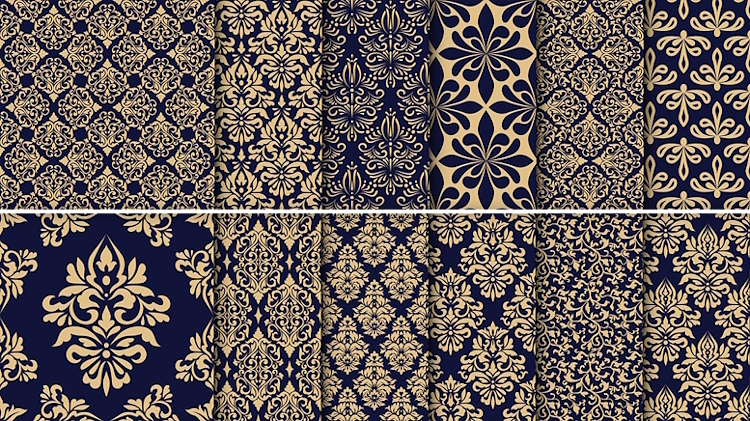
Where Damask Works Best in Interior Design
Damask is a statement fabric that works best when treated as one. The key to using it well in an interior space is giving it room to be seen. This is achieved by pairing it with calmer, plainer materials that let the pattern read clearly rather than competing with other bold surfaces.
Curtains and drapery.
These are the most popular applications for damask in the home, and for good reason. The fabric hangs well, has enough weight to drape beautifully at a window, and the pattern shows to full advantage in vertical folds. Damask curtains in a living room or dining room immediately highlight the room’s formal and visual richness.
Upholstery and seat cover.
This is where damasks have been used the longest. Traditionally, and in the homes of the wealthy, sofas, chaise longues, armchairs, dining chairs, and window seats were upholstered in damask. It gave (and still does) furniture bespoke qualities that are very hard to replicate with any other fabric. For accent chairs and formal occasional pieces in particular, damask upholstery is one of the most effective ways to make a single piece of furniture the focal point of a room.
Cushions and throw pillows.
Damask cushions and throw pillows work best on plain sofas, especially those upholstered in velvet, linen, or solid-colour cotton, where the woven pattern of the damask becomes the decorative detail that pops, without making the room feel overdressed.
Bed linen and headboards.
When made in damask, they are a classic choice for a formal or traditional bedroom style. Damask bed linen has a smooth, slightly cool feel and a subtle sheen that reads as quietly luxurious. A damask-upholstered headboard against plain painted walls needs very little else to make the room feel intentionally styled and complete.
Wall coverings.
This works best as an interior accent rather than all-over wall coverage. A single damask-covered feature wall behind a bed, a fireplace, or as a dining room backdrop creates an impressive focal point. Using it on every wall will be a disaster, as it can quickly feel overpowering.
Types of Damask Fabric
Damask is woven from a range of fibres, and the fibre content affects how the fabric feels, how it performs, and what it costs.
Silk damask is the original and the finest. It has the most luminous background, the sharpest pattern definition, and the most fluid drape. It is also the most expensive and the most delicate. It is best used for curtains, decorative cushions, and upholstery on low-use accent (occasional) furniture.
Cotton damask is more practical and affordable. It still has the characteristic woven pattern, but with a softer, more matte finish. It is easier to care for cotton damask than silk damask, plus it holds up better in everyday use. If you want that classic look for your bed linen, dining chair covers, and cushions, this is a good choice.
Linen damask has a slightly textured, natural feel. The pattern is less sharp than silk or cotton damask, but the fabric has a relaxed elegance that suits more casual or contemporary interiors. It is commonly used for table linen and lightweight draperies.
Wool damask is heavier and warmer. The pattern is softer than silk or cotton damask due to the natural texture of the fibre. It is well-suited for upholstery in cooler rooms and for heavier curtains in country-style or traditional interiors.
Synthetic and blended damask; polyester damask and silk-polyester blends are the most affordable options. At a distance, they can look very luxe and convincing and are a practical choice for larger projects where cost is a constraint. For crafts and decorative accessories, synthetic damask is a sensible alternative to the more expensive natural fibre versions.
Damask and Colour: What Works in an Interior
The colour choices for damask deserve some thought because the woven pattern means two tones are at play: the background and the raised design. Traditional damask uses tonal combinations: ivory on cream, gold on champagne, navy on midnight blue. These read as classic and formal.
More contemporary uses of damask play with higher contrast: black on white, deep teal on grey, burgundy on blush, which gives the fabric a more modern, graphic quality while keeping its inherent classic elegance.
When choosing damask for a room, hold a sample against the wall colour and the other fabrics in the space. The tonal relationship between the damask and its surroundings matters more with this fabric than with most others, because the pattern is always working even when the colour is subtle.
Caring for Damask
The care requirements for damask depend entirely on the fibre content:
- Silk damask is dry-clean only.
- Cotton and linen damask can usually be washed carefully at a low temperature, but always check the label first.
- Synthetic damask is the most straightforward to care for and can generally be machine-washed on a gentle cycle.
For upholstered pieces in damask, vacuum regularly with a soft upholstery attachment to prevent dust from settling into the weave. Deal with spills immediately by blotting gently (never rub), to avoid distorting the weave and damaging the pattern.
Buying Damask Fabric Online
When buying damask online, the fibre content and weight are the two most important details to check before ordering. A fabric listed simply as “damask” without fibre content information should be treated with caution. The difference between silk damask and polyester damask is significant in both quality and price, and the listing should make that clear.
Always order a sample before committing to a full length. The sheen and pattern definition of damask vary considerably between different qualities, and the only reliable way to assess it is to hold the fabric in the light conditions of the room where it will be used.