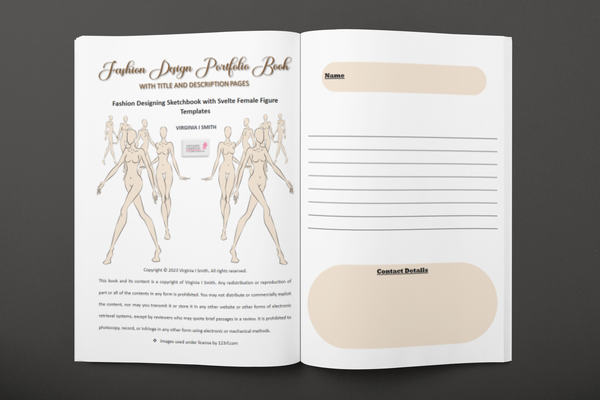
A strong fashion design portfolio is not just a stack of drawings. It is a collection of mood boards where fabric choices, colours, and sketches come together to tell the story of a design. A fashion sketchbook built around mood boards helps you put this story on paper, page by page.
Why Mood Boards Matter in Fashion Design
A sketch on its own only shows part of a design. It does not show which fabric the piece is made from, what its colours are, or what inspired it in the first place. A mood board brings all of this together in methodical spreads.
This is why many fashion designers work in mood boards rather than single-page sketches. Each spread becomes a small, complete pitch for one collection or idea, showing the fabric, the colours, the inspiration, and the design itself, side by side.
What a Good Fashion Mood Board Sketchbook Includes
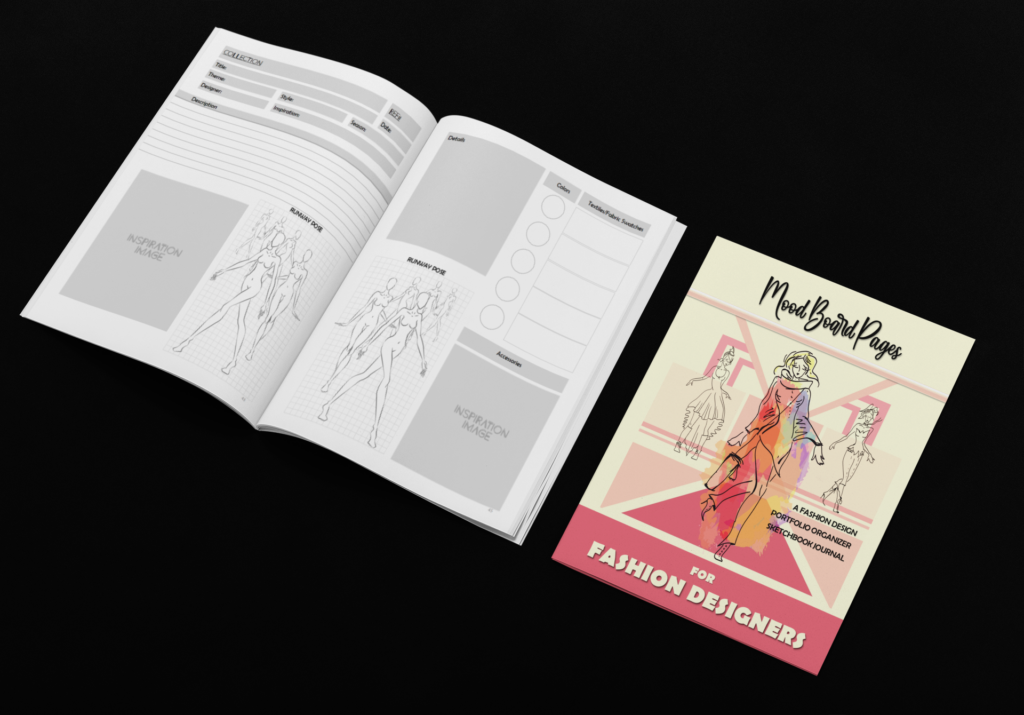
A well-built sketchbook for this purpose is laid out as a double-page spread for each collection. On one page, you usually find space for the project title and details, along with the design brief and blocks for sketching on a graph or dotted grid. The facing page often holds sections for inspirational images, accessory ideas, and a colour scheme.
Aside from the design illustrations, the detail that matters most for fabric-focused designers is a dedicated textile swatch section. This gives a place to attach or describe the actual fabric you are considering, right next to the sketch and colour palette. Without this, fabric choices tend to live separately, in swatch books or photos, disconnected from the design itself. That’s a disorganized approach.
Bringing Fabrics Early into the Design Process
Many beginner designers sketch first and think about fabric later. This often causes problems, since a design that looks good on paper might not work in the fabric eventually chosen for it. A mood board sketchbook encourages the opposite approach. Adding a textile swatch section on the same two (or four-page spreads) as the sketch pushes you to think about fabric from the very start of a design.
This habit leads to more realistic, wearable designs, since you are constantly checking your sketch against the fabric meant to bring it to life.
Why This Format is Great for a Real Portfolio
When it comes time to show your work, whether for a school project, to an employer, or a client, a collection of fashion mood board spreads presents far better than loose sketches and a bunch of fabric samples. Each page tells a complete story: the idea, the fabric, the colours, and the finished design concept.
A sketchbook with consistent typography and clear sections also makes your portfolio easier to navigate. Anyone flipping through it can quickly see the thinking behind each design, not just the final drawing.
Article of Interest
Who are These Sketchbooks Best For?
This style of sketchbook works well for fashion design students building coursework or application portfolios, as well as freelancers and beginner designers developing their own collections. It also suits anyone in fashion retail, or shop front design, who needs to present ideas clearly, with fabric and colour choices included from the start.
If your design process always comes back to fabric first, a mood board sketchbook keeps that focus built into every page, rather than leaving fabric choices as an afterthought.