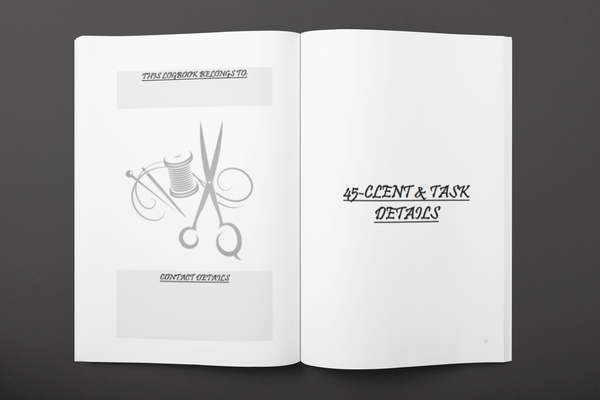
If you run a clothing alterations business, you already juggle a lot. Hems to shorten, zips to replace, waists to take in, and a different client for almost every job. A clothing alteration logbook helps you keep all this tidy, without relying on memory, nondescript notepads, or scraps of paper.
Why Alterations Work Needs Its Own System
Alterations are not quite the same as making a garment from scratch. Each job is usually smaller, but you often have many jobs running at once. One client might need a hem taken up. Another might need a jacket taken in at the waist. A third might be waiting on a zip repair. Without a clear system, it is easy to lose track of who needs what, and by when.
A book built specifically for alterations gives each job its own space. You write down the client’s name, the item they brought in, what work needs doing, and when it is due back. This turns a busy week of small jobs into something you can manage.
What to Look for in an Alterations Logbook
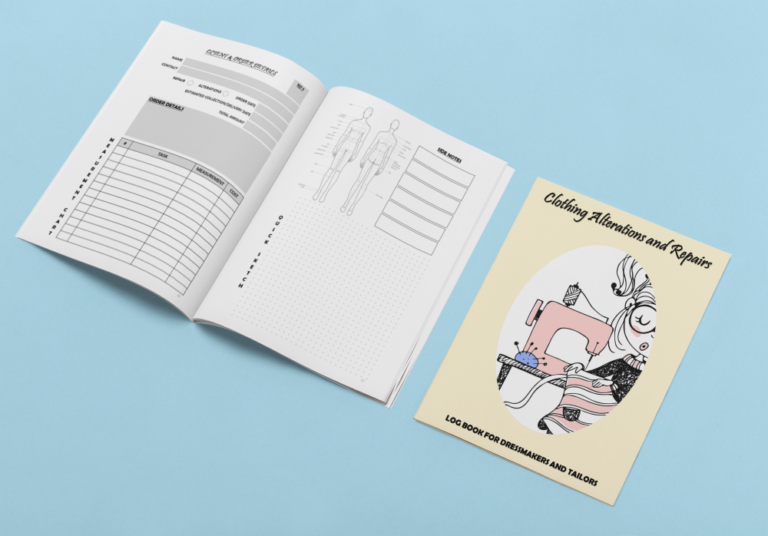
A useful alteration logbook covers more than just a name and a date. Look for one with space to record the original measurements, plus any changes needed, so you do not have to guess twice. There should be room to note the type of repair, such as hemming, taking in, letting out, or replacing fasteners.
It also helps to have a section for client contact details, so you can reach them when the item is ready. Some books include a simple checklist or status tracker, so you can see immediately which jobs are finished, and which are still in progress.
How This Helps You Run a Smoother Business
Many times, when alteration jobs pile up, mistakes happen:
- One client’s measurements get mixed up with someone else’s.
- A finished item is forgotten at the back of the shop.
A logbook reduces these risks because everything lives in one section, written down clearly.
It also makes your business look more professional. When a client sees you noting down their details properly, instead of relying on memory or using an odd notepad, it builds trust. They are more likely to come back next time they need something fixed or adjusted.
Who This Book Is For
This kind of logbook suits tailors and seamstresses who take on regular alteration work, whether as a side business or a full shop. It also helps dressmakers who make both new garments and repairs, since alterations need slightly different details recorded than a brand-new dress or suit.
If you find yourself relying on sticky notes, text messages, or memory to manage alteration jobs, a dedicated logbook is a simple fix. It keeps each client’s details, measurements, job status, etc, all in one tidy place, so nothing slips through the cracks.
Other Articles of Interest
Top Luxury Fabrics: 8 High-Quality Materials Worth Knowing
Fabrics for Fashion and Apparel: 11 Materials Every Designer Should Know