A sewing measurement logbook is one of the simplest tools you can add to your sewing business. This is more than a generic notebook, and it will save you from client and measurement mix-ups.
If you make clothes for clients, you already know the problem. Each client has different measurements. Each project has different notes. Without a system, it is easy to mix up one client’s waist size with another’s. logbook fixes this. It gives you one place to write down everything you need to remember methodically.
What Goes Inside a Sewing Logbook
A good logbook is built around a few simple sections. These sections match what a tailor or dressmaker needs from day to day.
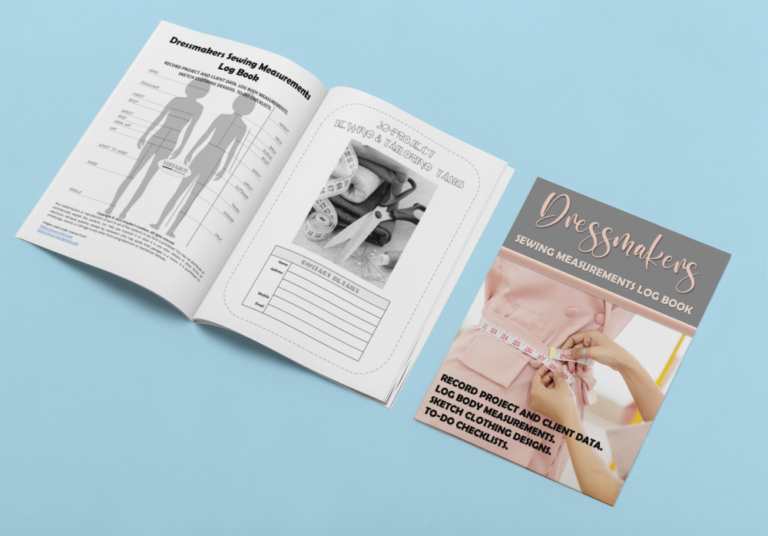
You will find designated spaces for client details such as name, dates, and contact information, a measurements section to input body measurements such as bust, waist, hips, and inseam, and note sections to write necessary and important details.
Some books also have space for hand sketches, so that you can draw a quick design idea next to the measurements.
Many include a to-do checklist, which means you do not forget steps like cutting fabric or fitting a hem.
This setup means you are not flipping between different notebooks, random notes, or apps. Everything for each client/customer project sits on its own pages.
Why Physical Logbooks Still Work in a Digital World
It might seem strange to recommend physical logbooks when there are apps for almost everything, but many sewists prefer niche-specific books for a few good reasons.
A paper logbook does not need charging. It does not crash or lose your data if your phone crashes. You can flip through pages quickly during a fitting without unlocking a device screen or needing to open an app. For many tailors and dressmakers, this is faster and less stressful than typing on a phone while a client is standing in front of them.
There is also something useful about writing by hand. It slows you down just enough to double-check a number before you write it. This small habit can prevent costly mistakes, like cutting fabric to the wrong size.
Who Benefits Most from a Measurements Logbook?
This kind of book is useful for anyone who takes body measurements as part of their work. That includes dressmakers, tailors, and seamstresses who work with regular clients. It also helps sewing students who are learning how to take and record measurements correctly.
If you run a small sewing business from home, a logbook helps you look organized and professional, even before a client sees your finished work. Walking in with a dedicated book, instead of the odd jotter or scraps of paper, builds trust.
Choosing the Right Logbook for Your Work
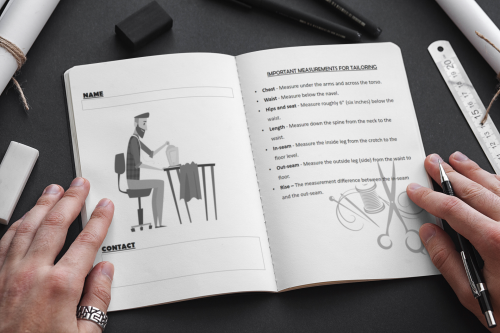
Not every logbook is built the same way. Some are made mainly for tailors working with menswear. Others are designed with dressmakers and bridal work in mind. Look for one with enough pages for the number of clients you expect to take on, and enough room per entry so you are not squeezing in extra notes.
It also helps to pick a book with a clear, simple layout. A confusing layout slows you down. A clean one lets you find what you need in seconds, even mid-fitting.
If you are just starting your sewing business, a measurement logbook is a small investment that pays off the first time it saves you from confusing two clients’ details. Once you get used to working with one, it becomes part of your normal sewing routine, the same as your tape measure or pins.
Logbooks Worth Adding to Your Sewing Kit
Customer Data and Sewing Measurements Workbook for Tailors: Custom Tailoring Logbook Journal