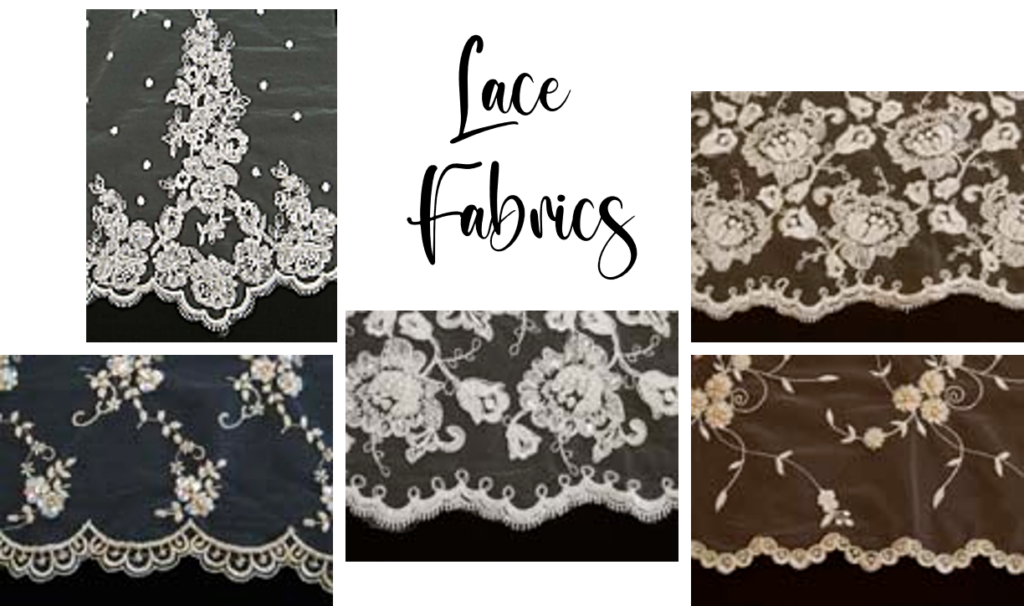
Lace is one of the most delicate and detailed fabrics out there. It is made by weaving threads into patterns full of holes and gaps, creating a see-through, decorative look. It’s been used for hundreds of years on wedding dresses, curtains, and fancy clothing.
No one knows exactly when lace-making started. While some claim Greece, in the late 1400s, others say Belgium in the late 1800s. What we do know, however, is that it became hugely popular in Renaissance Italy, especially in Venice.
Early lace was made from flax threads, and later, silk and even gold threads were used. By the 1800s, cotton had become the main material to weave lace fabrics.
Lace is usually named after the place where it was first made, with many famous types coming from France, Italy, and Belgium.
Traditional Handmade Lace
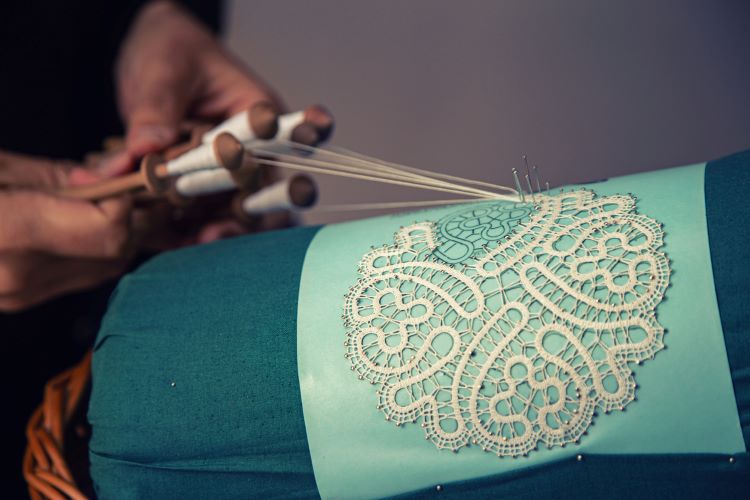
Before the advent of weaving machines, every piece of lace was made by hand. The traditional lace makers used pins, bobbins, or needles, along with knitting, sewing, crocheting, and knotting techniques to produce delicate lace. Here are some well-known traditional types:
- Filet lace: made by embroidering patterns onto a net fabric.
- Reticella lace: made using a “cut and draw” technique, where threads are removed and reworked into patterns.
- Duchess lace: a bobbin lace from Belgium, originally a cheaper alternative to Brussels lace.
- Chantilly lace: a fine silk lace from Chantilly, France. Known for its delicate background and detailed patterns. This style dates back to the 1600s.
- Irish lace: made using crochet techniques. It includes Limerick lace (embroidered on netting) and Carrickmacross lace (a layered, “sandwich” style lace).
- Nottingham lace: a machine-made lace, affordable and often used for curtains.
- Brussels lace: a group of bobbin lace styles that originated in Brussels, Belgium.
Contemporary Lace Materials
Machine-made lace became possible, thanks to new inventions, especially in America. Machine-produced lace is often more detailed and precise than handmade lace, and obviously, much faster to produce.
Common types of modern lace include:
- Guipure lace: a bold, raised lace often used by fashion designers.
- Baby lace: a soft, delicate lace often used for baby clothes and christening gowns.
- Voile lace: a lightweight, sheer lace, popular for curtains and veils.
- Organza lace: a crisp, slightly stiff lace with a subtle shine.
- Swiss lace: a fine, high-quality lace often used in lingerie and bridal wear.
Choosing the Right Lace for Your Project
Lace might look delicate, but it is a very flexible fabric. There’s a type for almost everything. Soft and sheer for veils and curtains, bold and raised for jackets and statement pieces, or fine and detailed for cushion covers and table linen.
If you’re working on something romantic or traditional, handmade styles like Chantilly or Irish lace bring real character and history to a project. And if you want something more affordable or with a cleaner finish, modern machine-made lace like guipure or voile lace is a great choice.
Whatever you’re making, a wedding dress, a curtain, or a simple cushion cover, there’s a lace fabric out there that fits. The trick is to match the lace’s weight and pattern to the job it needs to do, and the rest falls into place.